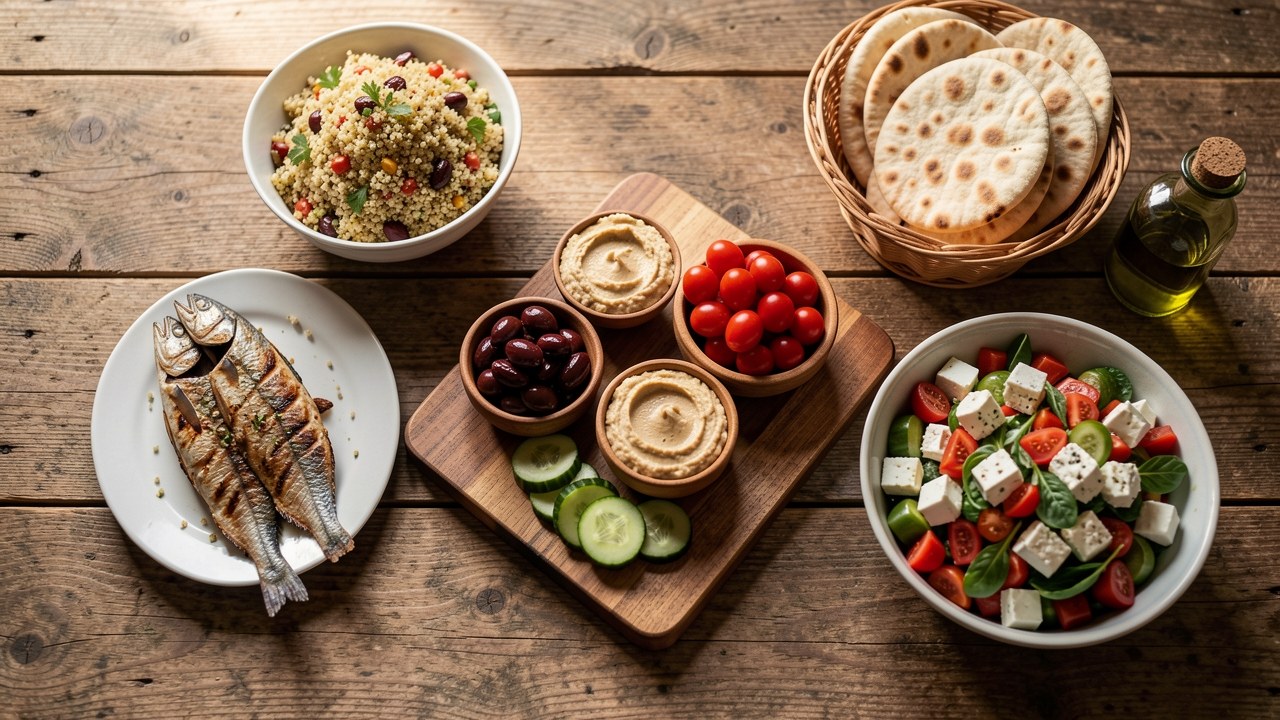
What Is the Mediterranean Diet?
The Mediterranean diet is inspired by the traditional cuisines of Greece, Italy, and other coastal cultures that celebrate seasonal produce, whole grains, and heart-healthy fats. It is not a rigid set of rules but a lifestyle built on mindful eating, social meals, and sustainable choices.
The eating pattern consistently emphasized in authoritative sources centers on plant foods: vegetables, fruits, legumes, whole grains, nuts, and seeds. Extra virgin olive oil is the main source of fat, and fish and seafood appear regularly, while poultry, eggs, cheese, and yogurt are eaten in moderation. Red meat and ultraprocessed foods are kept to a minimum.
This guide will help you translate these principles into a balanced weekly plan that fits your tastes and routine.
Sources: Mayo Clinic Diet
Mediterranean Eating
A Mediterranean-style meal plan is built on several key habits that work together to create a nourishing and enjoyable way of eating.
- Eat plentiful vegetables, fruits, legumes, and whole grains every day.
- Make extra virgin olive oil your main added fat.
- Include fish and seafood regularly—about two to three servings per week.
- Choose nuts, seeds, and legumes as protein and snack options.
- Keep poultry, eggs, cheese, and yogurt moderate, and red meat rare.
- Limit added sugar, refined grains, processed meats, and highly processed foods.
- Make water your go-to beverage, with optional moderate red wine (about one glass per day) and coffee or tea if you like.
- Pair eating with regular physical activity and enjoying meals with others.
Sources: Mayo Clinic Diet, Cleveland Clinic, University of Connecticut (UConn) Pharmacy
Step-by-Step Approach to Meal Planning
Start simple. You don't need to overhaul your kitchen overnight. Instead, make gradual changes that move you toward a Mediterranean pattern.
- Switch to extra virgin olive oil for cooking and dressing foods.
- Add a serving of vegetables to at least one meal each day, such as a side salad or roasted vegetables.
- Swap refined grains for whole grains—choose whole-wheat bread, brown rice, oats, or quinoa.
- Include a plant-based meal once or twice a week using beans, lentils, or chickpeas.
- Plan for fish or seafood at least twice a week.
- Replace sugary drinks with water, sparkling water, or unsweetened tea.
- Keep a bowl of fruit and a container of nuts on hand for easy snacks.
Sources: Harvard Health Publishing
Building a Balanced Plate: Vegetables, Fruits, Whole Grains, Healthy Fats, Protein
A balanced Mediterranean plate draws from five main food groups. Here's how to think about portions and frequency, based on guidance from the Cleveland Clinic.
Aim for at least three servings of vegetables and three servings of fruits each day. The rainbow of colors provides a range of nutrients and fiber.
Whole grains should appear at most meals—roughly three to six servings per day. A serving might be a slice of whole-grain bread, half a cup of cooked oats, or a third of a cup of cooked rice.
Extra virgin olive oil is your main source of added fat, with about one to four servings per day. One serving is typically one tablespoon.
For protein, include legumes (beans, lentils, chickpeas) at least three times per week, and fish about three times per week. Nuts can be enjoyed daily in small handfuls—about three or more servings per week is a good target. Poultry and eggs can be eaten in moderation, while red meat is limited to no more than one serving per week.
Dairy, such as yogurt and cheese, can be included in moderation, typically up to one serving per day.
| Food Group | Suggested Servings | Example of One Serving |
|---|---|---|
| Vegetables | At least 3 servings per day | 1 cup raw leafy greens, ½ cup cooked vegetables |
| Fruits | At least 3 servings per day | 1 medium fruit, ½ cup chopped fruit |
| Whole Grains | 3–6 servings per day | 1 slice whole-grain bread, ½ cup cooked oats, ⅓ cup cooked rice |
| Extra Virgin Olive Oil | 1–4 servings per day | 1 tablespoon |
| Legumes | 3 servings per week | ½ cup cooked beans or lentils |
| Fish and Seafood | 3 servings per week | 3–4 ounces cooked fish |
| Nuts | At least 3 servings per week | ¼ cup nuts or 2 tablespoons nut butter |
| Poultry, Eggs, and Dairy | Up to 1 serving per day each | 3–4 ounces cooked poultry, 1 egg, 1 cup milk or yogurt, 1 ounce cheese |
| Red Meat | No more than 1 serving per week | 3–4 ounces cooked lean red meat |
Sources: Cleveland Clinic
Portion Guidance
This framework shows how the recommended foods can flow through a day. Portions are flexible and based on your hunger and energy needs; the Mediterranean diet does not require calorie counting.
Start with a breakfast that combines whole grains and fruit, add a lunch built around a salad and legumes, and finish with a dinner centered on fish or vegetables. Snacks are simple and nutrient-dense.
- Breakfast: Oatmeal with berries, walnuts, and a splash of milk or yogurt.
- Lunch: Mixed greens with chickpeas, cucumber, tomatoes, olives, and a drizzle of olive oil, plus a slice of whole-grain bread.
- Snack: An apple with almond butter or a small handful of almonds.
- Dinner: Grilled salmon with roasted vegetables (broccoli, bell peppers, zucchini) and a side of quinoa or whole-wheat couscous.
- Dessert (optional): A piece of fresh fruit, such as an orange or a few grapes.
Sources: University of Connecticut (UConn) Pharmacy, Cleveland Clinic
Common Mistakes to Avoid
The Mediterranean diet is sustainable because it is flexible, but some common pitfalls can undermine your efforts.
- Don't skip vegetables at every meal. If you find it hard, add them where they fit naturally: spinach in scrambled eggs, extra tomatoes in a sandwich, or a bag of prewashed greens for quick salads.
- Avoid demonizing all fats. The goal is to replace butter and refined oils with olive oil, not to eat fat-free.
- Beware of overly processed 'diet' products. Choose whole foods most of the time.
- Remember that this is a lifestyle, not a temporary diet. Regular meals, enjoyable company, and stress management are part of the pattern.
- Plan ahead: keep a list of Mediterranean-friendly staples in your pantry, such as canned beans, whole grains, olive oil, nuts, and frozen vegetables.
- When eating out, choose fish or seafood as the main dish, ask for dishes prepared with olive oil, and enjoy whole-grain bread dipped in olive oil instead of butter.
Sources: University of Connecticut (UConn) Pharmacy, Mayo Clinic Diet
Frequently asked questions
How many meals should I eat per day on a Mediterranean diet?
The Mediterranean pattern doesn't dictate a specific number of meals. Many people eat three balanced meals and one or two snacks, but the key is to listen to your body and choose nutrient-dense foods. The focus is on quality and regularity rather than strict timing.
Sources: Mayo Clinic Diet, University of Connecticut (UConn) PharmacyCan I lose weight with a Mediterranean meal plan?
Yes, the Mediterranean eating pattern can support weight management when combined with a sensible calorie intake and physical activity. Because it encourages plenty of filling vegetables, legumes, and whole grains, it can help you feel satisfied while naturally controlling portions. Individual results depend on your overall eating pattern and activity level.
Sources: Mayo Clinic Diet, University of Connecticut (UConn) PharmacyIs olive oil essential to the Mediterranean diet?
Extra virgin olive oil is the primary source of fat in the Mediterranean pattern. It's used for cooking and dressing foods. While you could adapt the pattern with another heart-healthy oil, extra virgin olive oil is the traditional and most studied choice. Even if you use a different oil, the emphasis on healthy fats remains important.
Sources: Cleveland Clinic, University of Connecticut (UConn) PharmacyDo I need to count calories on a Mediterranean diet?
No, the Mediterranean diet typically does not require counting calories or tracking macronutrients. Instead, it emphasizes eating plenty of plant foods, choosing healthy fats, and moderating portions of animal products. This approach naturally helps many people maintain a healthy weight without formal tracking.
Sources: University of Connecticut (UConn) PharmacyWhat is the Mediterranean diet's approach to dairy?
Dairy is included in moderation, typically up to one serving per day. The main dairy choices are yogurt (especially plain Greek yogurt) and cheese. Milk is also acceptable. These foods provide calcium and protein without being the centerpiece of the diet.
Sources: Cleveland ClinicSources
- Mediterranean Diet Meal Plan — Mayo Clinic Diet
- Mediterranean Diet: Food List & Meal Plan — Cleveland Clinic
- Mediterranean Diet 101: A Meal Plan and Beginner's Guide — University of Connecticut (UConn) Pharmacy
- A practical guide to the Mediterranean diet — Harvard Health Publishing