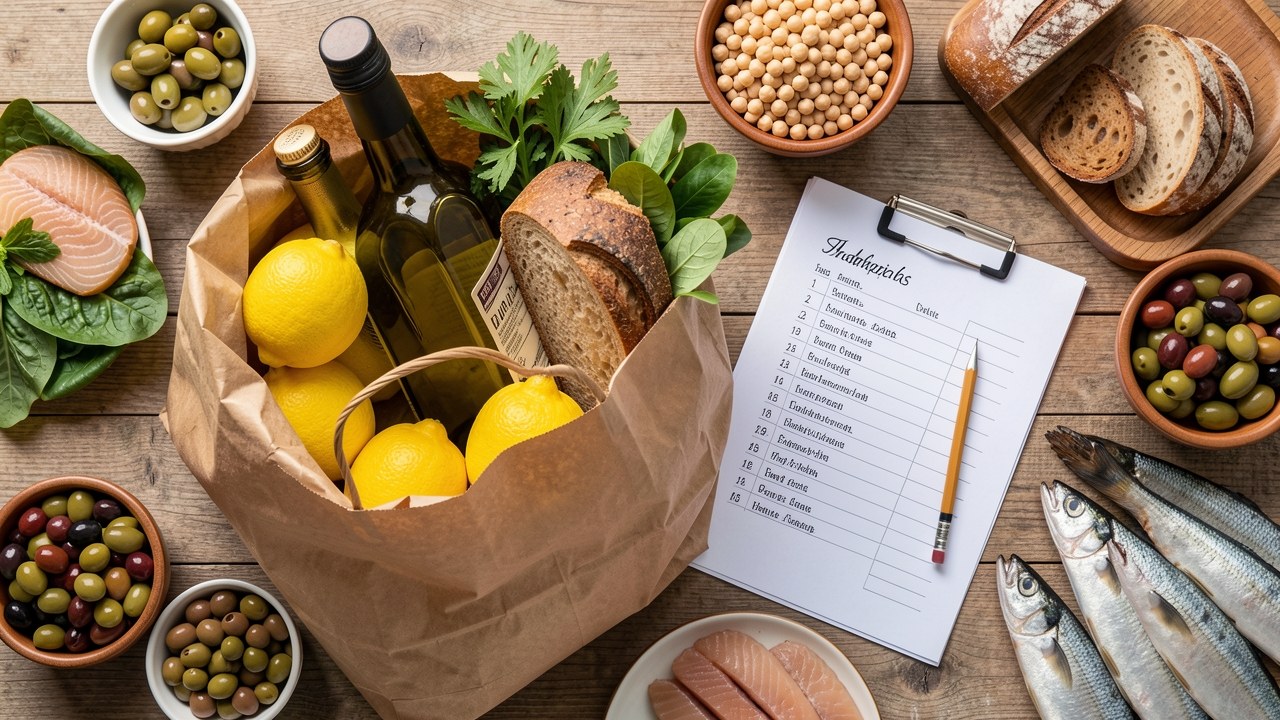
How to Use This Shopping List
The Mediterranean diet is a flexible, plant-forward way of eating. Use this list as a practical starting point, not a strict rulebook. The goal is to fill your cart with whole, minimally processed foods: vegetables, fruits, legumes, nuts, whole grains, and olive oil, with fish and poultry in moderate amounts.
Think of the list as your weekly template. Start with the items you already enjoy, then experiment with one or two new staples each trip. Over time, you'll build a kitchen that makes Mediterranean-style meals effortless.
- Fresh produce is best bought in smaller amounts to reduce waste, while pantry items like whole grains and canned beans can be stocked in larger quantities for flexibility.
- This list follows serving goals from Cleveland Clinic: at least 3 vegetable servings, 3 fruit servings, and 3 to 6 whole-grain servings per day. That means your cart should emphasize these foods over others.
- You don't need every item on the list each week. Let your meal plan guide your choices so you buy only what you'll actually use.
Sources: Cleveland Clinic
Fresh Produce: Vegetables and Fruits
Vegetables and fruits are the true backbone of the Mediterranean diet. Cleveland Clinic recommends at least 3 servings of vegetables and 3 servings of fruit each day. This section covers the kinds of produce that fit easily into Mediterranean cooking, whether fresh, frozen, or canned.
Aim for a colorful mix—leafy greens, tomatoes, peppers, eggplant, zucchini, citrus, and berries. These provide fiber, vitamins, and variety. Since the goal is three or more servings daily, keep these foods visible and easy to grab.
- Vegetables: spinach, kale, arugula, romaine, tomatoes, bell peppers, eggplant, zucchini, cucumbers, broccoli, cauliflower, carrots, onions, garlic
- Fruits: oranges, lemons, apples, berries, grapes, melon, peaches, pears
- Frozen produce is a convenient backup and retains nutrients—choose plain frozen vegetables and fruits without added sauces or sugars.
- Seasonal produce often costs less and delivers peak flavor. In the United States, plan around local harvests; for example, enjoy berries in summer and citrus in winter.
Sources: Cleveland Clinic
Proteins: Fish, Poultry, Beans, and Legumes
Proteins on this diet come mostly from plants and fish, with poultry in moderation. Cleveland Clinic recommends fish three times a week, especially fatty fish rich in omega-3s. Legumes—beans, lentils, chickpeas—should appear three times a week as a plant-based protein. Poultry, when you include it, is eaten in moderation, and red meat is reserved for an occasional treat.
Frozen and canned fish can be just as useful as fresh fillets, especially when you need convenience or are watching your budget. Canned beans are a staple for quick meals, while dried beans cost less but need more time.
- Fish (3 servings per week): salmon, sardines, herring, tuna, mackerel
- Legumes (3 servings per week): chickpeas, lentils, black beans, kidney beans, cannellini beans
- Poultry (up to once daily, 3-ounce portion): chicken breast, turkey breast, preferably skinless
- Red meat (limit to once weekly, 3-ounce lean cut): beef sirloin, pork tenderloin, lean lamb
- For budget-friendly protein, rotate beans and lentils into meals more often—they cost less per serving than fish or poultry.
Sources: Cleveland Clinic
Dairy and Alternatives
Dairy is part of the Mediterranean pattern but used with restraint. Cleveland Clinic recommends naturally low-fat or fat-free milk and yogurt, and limits cheese. Greek yogurt is a common staple, but be sure to choose plain versions to avoid added sugar.
If you prefer plant-based options, unsweetened almond or soy milk can fit, though they don't provide the same calcium unless fortified. Similarly, coconut or soy yogurt can replace dairy yogurt, but check for added sugars and calcium fortification.
- Yogurt: plain Greek or regular, fat-free or low-fat
- Cheese: use sparingly—feta, mozzarella, Parmesan, or goat cheese in small amounts
- Alternatives: unsweetened almond milk, soy milk, coconut milk, soy or coconut yogurt, and vegan cheese—look for fortified versions to match calcium content
Sources: Cleveland Clinic
Whole Grains and Breads
Whole grains provide steady energy and fiber. Cleveland Clinic recommends 3 to 6 servings a day, and stresses that breads, cereals, couscous, and pasta should be whole-grain or whole-wheat versions.
Having a variety of grains on hand makes meals interesting and keeps you from falling into a wheat-only rut. Oats for breakfast, quinoa for salads, and barley in soups all fit the Mediterranean pattern.
- Buy: oats, quinoa, barley, brown rice, whole-wheat bread, whole-wheat couscous, whole-wheat pasta
- Aim for at least 3 servings per day; one serving is about a slice of bread or 1/2 cup cooked grain.
- In the US, shop the bulk bins to buy only the amount you need and often at a lower price.
Sources: Cleveland Clinic
Healthy Fats: Olive Oil, Nuts, and Seeds
Extra virgin olive oil is the centerpiece—use it as your main cooking fat and for dressing salads. Cleveland Clinic recommends 1 to 4 tablespoons daily. Nuts and seeds add protein, fiber, and healthy fats, but they're calorie-dense, so portion control matters.
Choose raw, unsalted, or dry-roasted nuts. A serving is 1/4 cup of nuts or 2 tablespoons of nut butter.
- Olive oil: extra virgin for best quality and flavor; use it for sautéing, roasting, and vinaigrettes
- Nuts: walnuts, almonds, hazelnuts, pistachios, cashews
- Seeds: chia, flax, pumpkin, sesame, sunflower
- Nut butters: choose unsweetened, no-stir varieties with minimal ingredients
- Store olive oil in a cool, dark cabinet away from direct light or heat to keep it fresh.
Sources: Cleveland Clinic
Herbs, Spices, and Condiments
Herbs and spices are the workhorses of Mediterranean flavor, helping you reduce sodium while keeping meals exciting. While Cleveland Clinic's guidance centers on the core food groups, a well-stocked spice drawer is essential for variety. Use fresh herbs when you can, and keep dried versions for convenience.
This list is based on common Mediterranean cooking ingredients, not a clinical recommendation. Feel free to adapt to your own taste.
- Dried herbs: oregano, basil, thyme, rosemary, parsley, mint
- Spices: cumin, coriander, paprika, cinnamon, black pepper
- Alliums: garlic, onion (fresh and powdered)
- Condiments: Dijon mustard, red wine vinegar, balsamic vinegar, capers, olives (in brine)
- Canned tomatoes are a Mediterranean pantry staple—use them for sauces, soups, and stews.
Budget-Friendly Tips and Swaps
Following a Mediterranean eating pattern doesn't have to break the bank.
The biggest savings often come from making plants the center of your plate. Beans and lentils are among the least expensive protein sources, and they count toward your weekly legume goal. Frozen vegetables are typically cheaper than fresh and just as nutritious.
- Budget-Friendly Tips:
- Buy store-brand staples like canned beans, frozen vegetables, and whole grains—they usually cost less and taste similar.
- Use dried beans instead of canned when you have time to soak and cook them; they're even more economical.
- Plan meals around produce that's on sale or in season. Seasonal items are often discounted at supermarkets.
- Compare unit prices on shelf tags to get the best deal per ounce or pound.
- Consider buying larger bags of grains and nuts, then portion them at home to save money.
- Swaps:
- Choose frozen or tinned fish like sardines and tuna over fresh when you want to trim costs. Cleveland Clinic notes that these options are acceptable alternatives to fresh fish.
Sources: Cleveland Clinic
Frequently asked questions
Should I buy fresh or frozen vegetables?
Both fresh and frozen vegetables can be healthy choices. Cleveland Clinic emphasizes eating at least 3 servings of vegetables daily, without specifying that they must be fresh. Frozen vegetables are often picked at peak ripeness and can be more convenient and budget-friendly. Choose plain frozen varieties without added sauces or salt, and use fresh when you want crisp texture or plan to eat them raw.
Sources: Cleveland ClinicHow can I save money on fish?
Cleveland Clinic's guidance notes that frozen and tinned fish are acceptable alternatives to fresh. To save money, buy canned tuna, sardines, or salmon, and look for frozen fillets when they go on sale. You can also choose less expensive but still healthy fish like mackerel or herring, which are also on the recommended list. Fresh fish can be bought in bulk and frozen at home.
Sources: Cleveland ClinicCan I shop once a week for a Mediterranean diet?
Yes, a weekly shopping trip can work well, especially if you plan your menu ahead. Focus on buying enough produce for the week—either fresh with shorter shelf life or frozen for later. Canned beans, whole grains, and frozen fish can be stored much longer, so you can stock up without worry. To avoid spoilage, buy more hearty vegetables like carrots and cabbage, and use softer greens earlier in the week.
Sources
- Mediterranean Diet: Food List & Meal Plan - Cleveland Clinic — Cleveland Clinic
- How To Follow a Mediterranean Diet — Cleveland Clinic