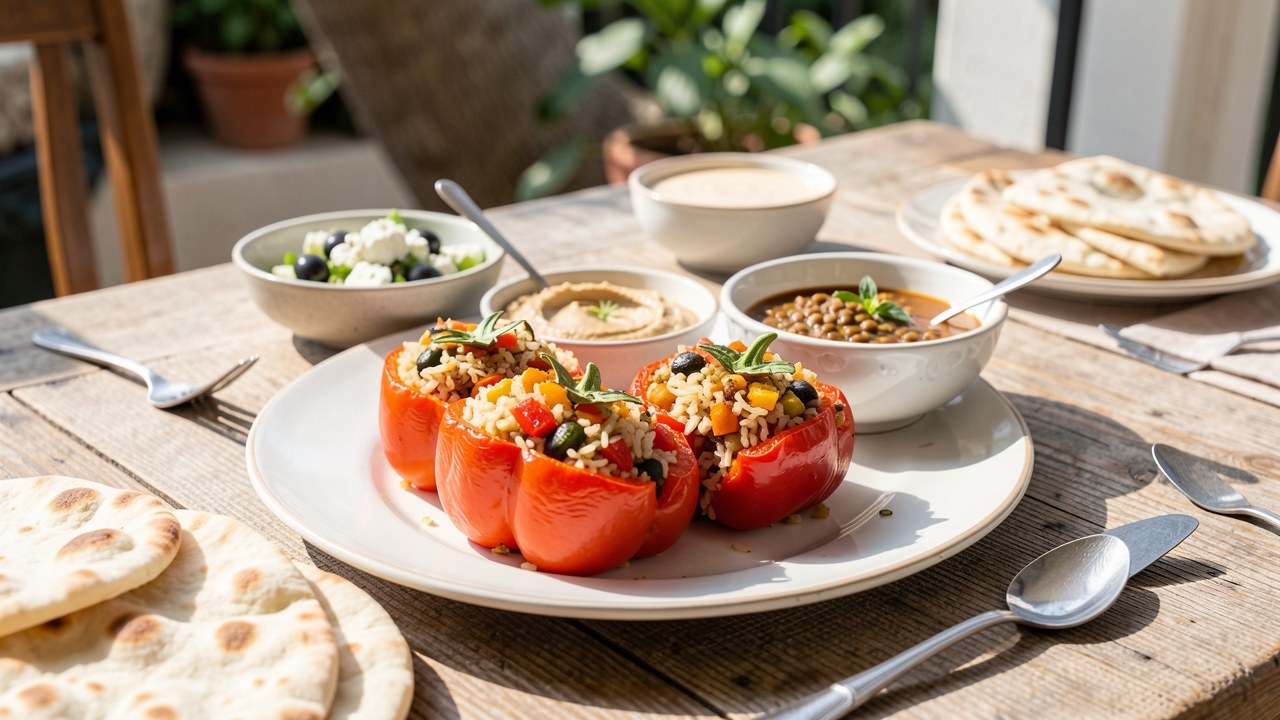
Why the Mediterranean Diet Suits Vegetarians
The Mediterranean diet is often described as a plant-forward way of eating, focusing on vegetables, fruits, whole grains, legumes, nuts, and olive oil, rather than strict rules about what to avoid. Cleveland Clinic highlights that the diet emphasizes overall eating patterns, making it a natural fit for vegetarians who want to emphasize plant-based foods.
Since its foundation already includes generous servings of vegetables, fruits, whole grains, and legumes, removing meat does not require a complete overhaul of the eating style. You can keep core Mediterranean principles while trading animal proteins for plant-based choices.
- Daily goals include at least three servings of vegetables and three servings of fruit.
- Whole grains and starchy vegetables are encouraged at three to six servings per day.
- Legumes such as beans and lentils are recommended at least three times per week.
Sources: Cleveland Clinic, Berry Street
Key Vegetarian Protein Sources in the Mediterranean Diet
Several protein-rich plant foods are central to vegetarian Mediterranean meal planning. Legumes, including lentils, chickpeas, and beans, are traditional staples. In addition, tofu, tempeh, and seitan are sometimes included as versatile protein options that adapt well to Mediterranean seasonings.
Nuts and seeds also contribute protein and healthy fats, though they are typically eaten in smaller amounts. Whole grains like quinoa and bulgur provide protein as well, making them valuable components of a vegetarian plate.
- Legumes: lentils, chickpeas, black beans, cannellini beans
- Soy foods: tofu, tempeh, and seitan (often used in Mediterranean-style bowls or skillets)
- Nuts and seeds: almonds, walnuts, chia seeds, flaxseeds
- Whole grains: quinoa, brown rice, bulgur, farro
Sources: Berry Street, Prep + Rally
Building a Vegetarian Mediterranean Plate
A straightforward approach is to create a balanced plate that draws from the Mediterranean diet's core food groups: a variety of colorful vegetables, whole grains, legumes, and healthy fats from olive oil, with optional dairy or eggs. Cleveland Clinic's general principles apply to vegetarians as well, such as enjoying at least three servings of vegetables and three servings of fruit daily.
For each main meal, aim for a foundation of grains or starchy vegetables, add a serving or two of vegetables, and include a legume or soy-based protein. Finish with a drizzle of extra virgin olive oil or a sprinkle of nuts and seeds for healthy fats. Dairy products like Greek yogurt and feta cheese can be added if you include them in your diet.
- Fill half your plate with vegetables and fruit.
- Include a quarter plate of whole grains like quinoa or whole-wheat pasta.
- Add a quarter plate of legumes (e.g., lentils, chickpeas) or tofu/tempeh.
- Use extra virgin olive oil as your main cooking and dressing fat.
Sources: Cleveland Clinic, Berry Street, Prep + Rally
Sample Vegetarian Meal Combinations
These meal ideas translate Mediterranean principles into satisfying vegetarian plates. Remember to customize portions to your hunger and activity level.
"Breakfast burrito" with tofu scramble, black beans, and avocado is a protein-packed start. For lunch, a chickpea and quinoa grain bowl offers ample fiber and plant protein. In the evening, a lentil soup served with whole grain pita makes a comforting dinner.
Experiment with combinations of roasted vegetables, lentils, and grains seasoned with herbs like oregano and basil, always finishing with a splash of olive oil.
- Breakfast: Tofu scramble with black beans, spinach, and avocado in a whole-wheat tortilla
- Lunch: Quinoa bowl with roasted chickpeas, cucumber, tomatoes, olives, and a lemon-olive oil dressing
- Dinner: Hearty lentil soup with carrots, celery, and herbs, served with whole grain pita
- Snack idea: Greek yogurt with berries and a sprinkle of chia seeds (if dairy is included)
Sources: Berry Street
Dealing with Common Nutritional Concerns
Vegetarians need to pay attention to certain nutrients, and the Mediterranean diet can help address them. Iron is a key nutrient found in lentils, beans, and leafy greens. Pairing these with vitamin C-rich foods like tomatoes or citrus can enhance absorption.
Vitamin B12 is naturally found in animal products; if you include dairy and eggs, you can get some B12 from Greek yogurt and eggs. If you follow a stricter plant-based pattern, you may need to rely on fortified foods or discuss supplementation with a healthcare provider.
Omega-3 fatty acids are another concern; plant sources include walnuts, chia seeds, and flaxseeds, all of which can be incorporated into Mediterranean meals.
- Iron: lentils, chickpeas, spinach, and fortified grains; pair with vitamin C sources.
- B12: dairy and eggs if you consume them; otherwise, consider fortified plant milks or a supplement after consulting a professional.
- Omega-3s: walnuts, chia seeds, ground flaxseed.
Sources: Berry Street, Prep + Rally
Adapting Your Shopping List
To make vegetarian Mediterranean eating simple, keep your pantry stocked with the basics. Focus on whole grains, legumes, nuts, seeds, and flavorful condiments like olive oil and herbs.
A shopping list might include quinoa, brown rice, oats, whole-wheat pasta, bread, canned lentils, chickpeas, black beans, and a variety of frozen or fresh vegetables. Add tofu or tempeh for convenience, and keep nuts like almonds and walnuts on hand.
Dairy, if you use it, might include Greek yogurt and feta cheese. Eggs are another optional protein source. Favor extra virgin olive oil as your primary fat, and use herbs and spices to add flavor without extra salt.
- Produce: leafy greens, tomatoes, cucumbers, bell peppers, onions, garlic, lemon
- Whole grains: quinoa, brown rice, oats, whole-wheat pasta, pita bread
- Legumes and plant proteins: lentils, chickpeas, black beans, tofu, tempeh
- Dairy and eggs (optional): Greek yogurt, feta cheese, eggs
- Fats and flavorings: extra virgin olive oil, olives, herbs, spices
Sources: Berry Street, Prep + Rally
Frequently asked questions
Can I get enough protein on a vegetarian Mediterranean diet?
Yes. The Mediterranean diet's emphasis on legumes, whole grains, and nuts provides ample protein. For example, lentils, chickpeas, and beans are traditional staples, and you can also include tofu or tempeh. A meal like a chickpea and quinoa bowl delivers significant plant protein.
Sources: Berry Street, Prep + RallyWhat are good meat substitutes for Mediterranean recipes?
Legumes—such as lentils, chickpeas, and cannellini beans—are excellent plant-based substitutes that fit Mediterranean flavor profiles. Additionally, tofu and tempeh can be marinated with Mediterranean herbs and used in bowls or stir-fries. Seitan is another option if you are not gluten-sensitive.
Sources: Berry Street, Prep + Rally, Everyday HealthDo I need to worry about iron or B12?
Iron can be obtained from lentils, beans, and leafy greens, while pairing them with vitamin C-rich foods like tomatoes enhances absorption. Vitamin B12 is trickier: if you eat dairy and eggs, you'll get some, but if you avoid those, you may need fortified foods like plant milks or a supplement—speak to your healthcare provider about what's right for you.
Sources: Berry Street, Prep + RallyIs vegan possible on the Mediterranean diet?
Yes, a vegan Mediterranean diet is feasible by focusing on plant-based elements like legumes, whole grains, nuts, and olive oil, and omitting dairy and eggs. However, you'll need to pay careful attention to vitamin B12 and possibly other nutrients like iron, considering fortified foods or supplements as needed.
Sources: Cleveland Clinic, Berry Street, Prep + RallySources
- Mediterranean Diet: Food List & Meal Plan - Cleveland Clinic — Cleveland Clinic
- Vegetarian Mediterranean Diet Meal Plan: Your 7-Day Guide — Berry Street
- Beginner's Guide: Vegetarian Mediterranean Meal Plan - Prep + Rally — Prep + Rally
- Mediterranean Diet: Complete Food List and 14-Day Meal ... — Everyday Health