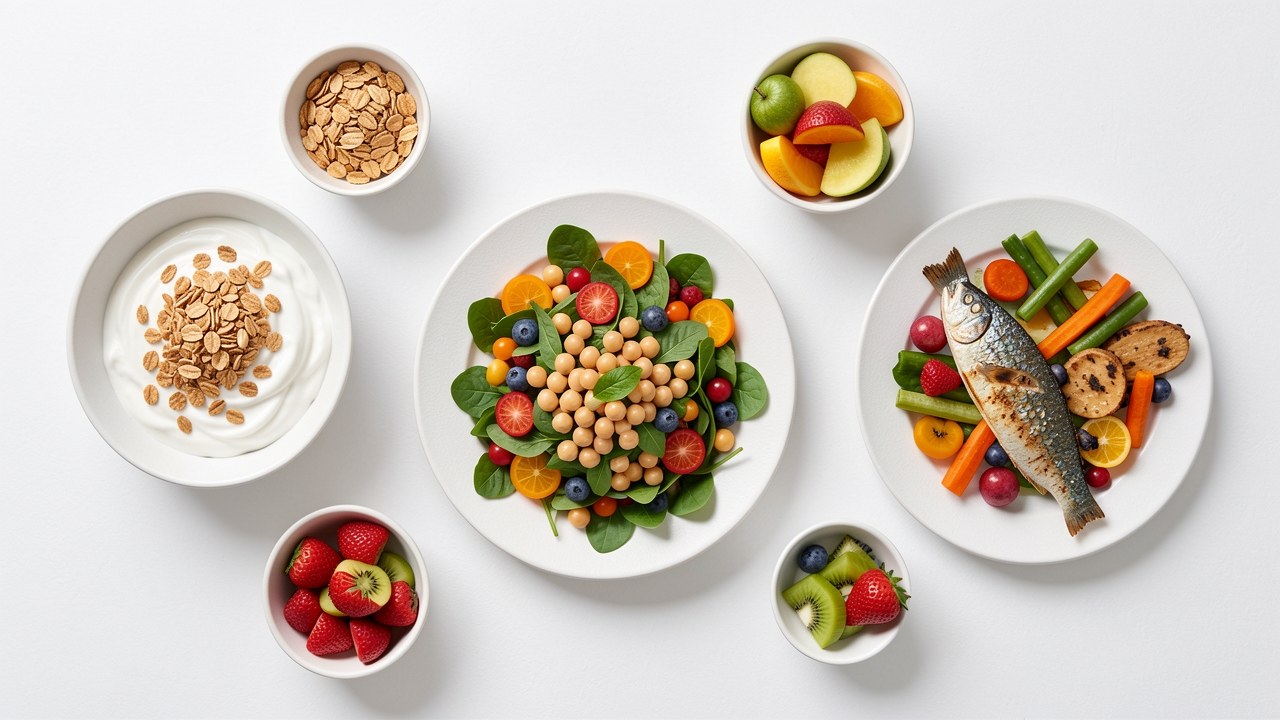
How to Use This Meal Plan
This sample Mediterranean diet meal plan is designed to help you see what a balanced week of eating might look like when you follow the core principles of the Mediterranean pattern. You do not have to follow it perfectly; use it as a starting point for your own healthy meal planning ideas.
Each day includes breakfast, lunch, dinner, and a snack suggestion. Meals emphasize fruits, vegetables, whole grains, legumes, and olive oil, with moderate portions of fish and seafood and limited red meat and ultra-processed foods. Portions are not specified because individual needs vary—adjust amounts to your hunger and energy levels.
- Build each meal around plant foods: vegetables, fruits, legumes, nuts, seeds, and whole grains.
- Use olive oil as your main added fat.
- Include fish or seafood at least a couple of times per week.
- Keep dairy and eggs moderate, and limit red meat to occasional small portions.
- Try to make meals from minimally processed ingredients.
Sources: Mayo Clinic Diet, Harvard Health Publishing
Day 1: Monday
Monday starts with a hearty breakfast that feels like a treat, followed by a filling lunch and a light dinner that won't weigh you down.
- Breakfast: Quick roasted tomato and feta bruschetta on whole-grain toast.
- Lunch: Cannellini bean and vegetable salad with olive oil and lemon.
- Dinner: Baked cod with a side of roasted zucchini and cherry tomatoes, dressed with olive oil and herbs.
- Snack: A small handful of almonds and an orange.
Sources: Mayo Clinic Diet
Day 2: Tuesday
Tuesday brings a Mediterranean-style twist on familiar favorites—a satisfying omelet for lunch and a colorful grain bowl for dinner.
- Breakfast: Greek yogurt parfait with berries and a sprinkle of walnuts.
- Lunch: Vegetable omelet with a side salad of mixed greens, cucumber, and olive oil vinaigrette.
- Dinner: Quinoa bowl with chickpeas, roasted red peppers, spinach, and a tahini-lemon dressing.
- Snack: Sliced veggies with hummus.
Sources: Harvard Health Publishing
Day 3: Wednesday
Midweek, the plan keeps things simple while packing in produce and legumes.
- Breakfast: Overnight oats made with oat milk, chia seeds, and diced apple with cinnamon.
- Lunch: Chickpea and farro salad with chopped red peppers, parsley, and a lemon-olive oil dressing.
- Dinner: Grilled chicken breast with a large Greek salad (tomatoes, cucumber, olives, feta, and oregano).
- Snack: A pear and a small piece of cheese.
Sources: Harvard Health Publishing
Day 4: Thursday
Thursday leans into the Mediterranean tradition of fish as the centerpiece of dinner.
- Breakfast: Scrambled eggs with sautéed spinach and a slice of whole-grain toast.
- Lunch: Lentil soup with a side of rustic whole-grain bread.
- Dinner: Grilled salmon with quinoa and steamed broccoli, drizzled with olive oil and lemon.
- Snack: A tangerine and a few olives.
Sources: Harvard Health Publishing
Day 5: Friday
Friday offers a vegetarian dinner that is both filling and simple to prepare.
- Breakfast: Smoothie made with spinach, banana, Greek yogurt, and a spoonful of almond butter.
- Lunch: Tuna salad-stuffed whole-wheat pita with lettuce, tomato, and cucumber.
- Dinner: Whole-wheat pasta with sautéed cherry tomatoes, garlic, cannellini beans, and fresh basil.
- Snack: Carrot sticks and a small handful of walnuts.
Sources: Mayo Clinic Diet, Harvard Health Publishing
Day 6: Saturday
The weekend plan includes a more leisurely breakfast and a dinner that works well for sharing.
- Breakfast: Whole-grain toast topped with ricotta, sliced tomatoes, and a drizzle of olive oil.
- Lunch: Greek salad with feta and olives, plus a side of crusty whole-grain bread.
- Dinner: Roasted vegetable and chickpea tray bake with sweet potatoes, eggplant, and zucchini, seasoned with oregano.
- Snack: Mixed berries with a spoonful of yogurt.
Sources: Harvard Health Publishing
Day 7: Sunday
Sunday ends the week with a comforting meal that still follows the Mediterranean pattern.
- Breakfast: Whole-grain pancakes topped with sliced strawberries and a little honey.
- Lunch: Bell pepper stuffed with a mixture of brown rice, ground turkey, tomatoes, and herbs.
- Dinner: Hearty minestrone soup with mixed vegetables and cannellini beans, served with a slice of whole-grain bread.
- Snack: Apple slices with a small piece of dark chocolate.
Sources: Mayo Clinic Diet, Harvard Health Publishing
Adjusting the Plan for Your Preferences
This meal plan is a template, not a strict prescription. You can easily swap meals between days or modify them to suit your taste and what you have on hand.
If you don't eat fish, replace fish dishes with legumes, eggs, or tofu, which also provide protein and fit the Mediterranean pattern. For example, swap grilled salmon for a lentil burger or a chickpea salad. For family meals, prepare larger portions of the same dishes—most are naturally family-friendly—and let individuals adjust seasoning or sides.
This plan also works for weight management when you tune portion sizes to your own energy needs. Pay attention to serving sizes and your hunger cues. Because individual calorie needs vary, the sample does not specify amounts; use a balanced plate as a guide: fill half with vegetables, a quarter with whole grains, and a quarter with protein.
- Swap meals between days as long as you keep the overall balance of vegetables, whole grains, legumes, and healthy fats.
- If you don't eat fish, try: lentil soup, chickpea salad, bean burrito bowl, or a tofu stir-fry.
- For family use, serve the meal family-style and let each person choose their portion size.
- For weight management, adjust serving sizes rather than skipping food groups; include plenty of vegetables and control portions of higher-calorie foods like nuts and cheese.
Sources: Mayo Clinic Diet, Harvard Health Publishing
Frequently asked questions
Can I swap meals between days?
Yes. The sample plan is meant to be flexible. You can switch any meal for another in the same week as long as you keep the overall pattern balanced: plenty of vegetables, fruits, whole grains, legumes, and healthy fats like olive oil. Swapping a fish dinner for a vegetarian bean dish is fine, too.
Sources: Mayo Clinic DietWhat if I don't eat fish?
Simply replace fish dishes with plant-based proteins such as legumes (chickpeas, lentils, beans), tofu, or eggs. For example, substitute grilled salmon with a hearty lentil soup or a chickpea and vegetable stir-fry. The Mediterranean pattern emphasizes plant foods, and fish is only one optional source of protein.
Sources: Mayo Clinic Diet, Harvard Health PublishingCan I use this plan for my family?
Yes. Most of the meals are family-friendly and can be prepared in larger batches. Serve family-style and let each person take what they like. You can also adjust spices or side dishes to please younger or pickier eaters.
Sources: Mayo Clinic DietHow can I adjust portions for weight management?
Start by adjusting serving sizes to match your energy needs. Use a balanced plate as a guide: half vegetables, a quarter whole grains, and a quarter protein. Pay attention to hunger and fullness cues. The plan does not include specific calorie amounts because needs vary; you can increase or decrease portions accordingly.
Sources: Mayo Clinic Diet, Harvard Health PublishingSources
- Mediterranean Diet Meal Plan — Mayo Clinic Diet
- Guide to the Mediterranean diet — Harvard Health Publishing