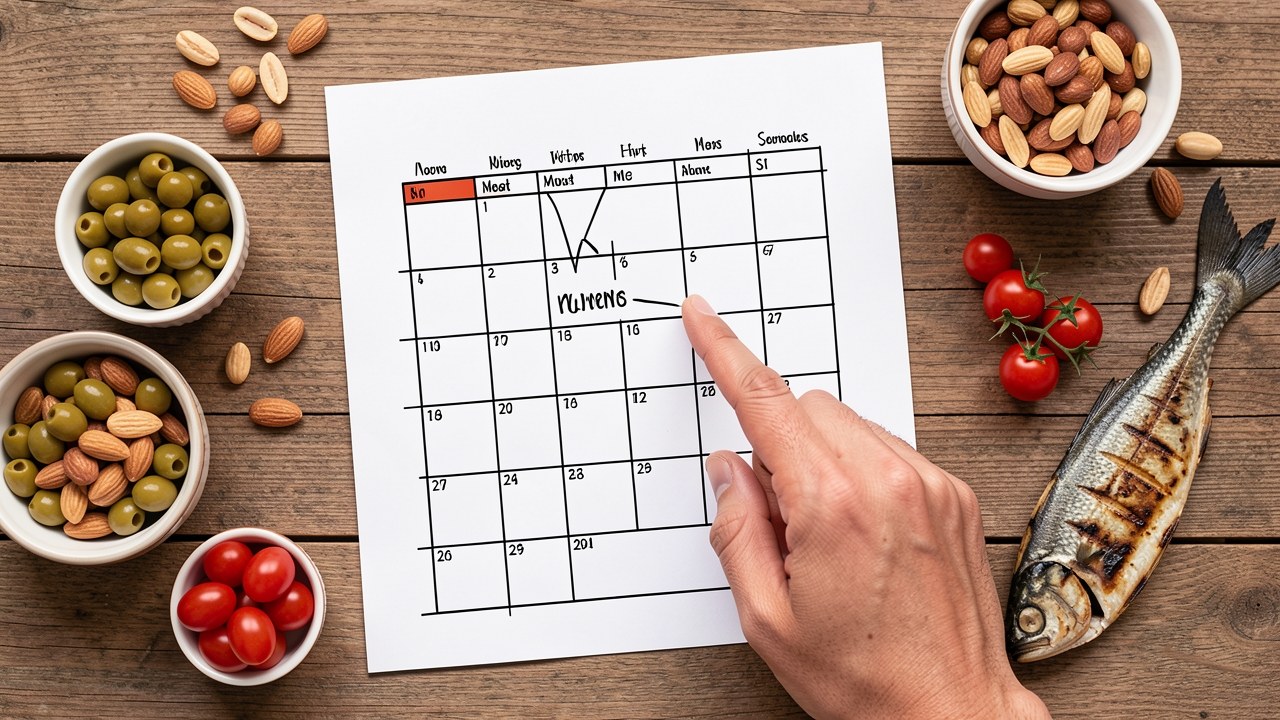
How to Use This Weekly Plan
This plan gives you a flexible structure for a week of Mediterranean-style meals. It is not a rigid prescription; you can swap meals and adjust portions to fit your preferences and needs. The focus is on plant-based foods like vegetables, fruits, whole grains, legumes, nuts, and olive oil, with fish and seafood a few times per week.
Think of each day as a template. For breakfast, choose a base like yogurt or oatmeal. For lunch and dinner, aim to fill half your plate with vegetables, a quarter with whole grains or starchy vegetables, and the remainder with a protein such as legumes, fish, or poultry. Some days are vegetarian, which is fine, and you can repeat meals if that makes planning easier.
- Start with the suggested meals for each day, but feel free to swap in other Mediterranean recipes you enjoy.
- Use the portion guidance in this page to build balanced meals.
- Prepare some ingredients in advance to save time, like washing and chopping vegetables or cooking a batch of grains.
- Read through the entire week to see the variety of meals.
- Check your pantry and refrigerator against the grocery list.
- Choose a day to shop and, if helpful, set aside a couple of hours for simple meal prep.
- Follow the day-by-day plan, adjusting portions to your hunger and activity level.
- Keep leftovers for lunch the next day when indicated, and store them properly.
Sources: Mayo Clinic Diet, Cleveland Clinic
Day-by-Day Breakfast, Lunch, and Dinner
The following sample week includes a mix of breakfast, lunch, dinner, and snacks. These are meal ideas rather than exact recipes, so you can adjust them to what you have on hand. The plan reflects the Mediterranean pattern of including vegetables, whole grains, legumes, and healthy fats daily, with fish twice this week.
Each meal is designed to be satisfying and balanced, and you can repeat any meal on another day if you like. Feel free to change the day order or swap in your own Mediterranean-inspired dishes.
- Adjust the meals to include your favorite vegetables and proteins.
- Aim to include at least three servings of vegetables and three servings of fruit across the day.
- Use olive oil as your main added fat, aiming for 1 to 4 tablespoons per day.
| Day | Breakfast | Lunch | Dinner |
|---|---|---|---|
| Monday | Greek yogurt with berries and a tablespoon of walnuts | Chickpea and vegetable salad with olive oil and lemon | Roasted salmon with green beans and cherry tomatoes |
| Tuesday | Oatmeal topped with sliced banana and a drizzle of honey | Whole-wheat wrap with hummus, cucumber, tomato, and feta | Lentil soup with a side of whole-grain bread |
| Wednesday | Scrambled eggs with spinach and whole-grain toast | Quinoa bowl with black beans, corn, avocado, and salsa | Grilled chicken with roasted vegetables and couscous |
| Thursday | Smoothie with spinach, frozen berries, and almond butter | Leftover lentil soup for lunch | Baked cod with a tomato-herb sauce and steamed broccoli |
| Friday | Cottage cheese with pineapple and a sprinkle of chia seeds | Mediterranean tuna salad with white beans and greens | Whole-wheat pasta with marinara sauce and a side salad |
| Saturday | Whole-grain pancakes with fresh fruit and a drizzle of maple syrup | Vegetable and feta frittata with a side salad | Shrimp and vegetable kabobs with quinoa |
| Sunday | Yogurt parfait with granola and mixed berries | Roasted vegetable sandwich with hummus | Slow-cooked chicken and vegetable stew with whole-grain bread |
Sources: Mayo Clinic Diet, EatingWell
Snack Ideas Throughout the Week
Snacks can help you meet your daily fruit, vegetable, and nut goals. Choose snacks that add nutrients rather than highly processed options. A few simple ideas are listed below; you can repeat them as often as you like.
- Fresh fruit paired with a small handful of almonds or walnuts.
- Vegetable sticks, such as carrot or bell pepper, with hummus.
- A small bowl of plain Greek yogurt with a drizzle of honey.
- A slice of whole-grain toast with mashed avocado and a pinch of salt.
- A small handful of olives with a piece of cheese.
Sources: Mayo Clinic Diet, Cleveland Clinic
Portion Sizes for Each Meal
Portion sizes are general guides; your needs vary based on age, sex, activity, and goals. The following servings are based on common recommendations from sources like Cleveland Clinic and are meant as a starting point.
- Vegetables: At least 3 servings per day; a serving is ½ cup cooked or 1 cup raw.
- Fruits: 3 servings per day; a serving is ½ to 1 cup.
- Whole grains and starchy vegetables: 3 to 6 servings per day; a serving is ½ cup cooked grains, pasta, or cereal, 1 slice of bread, or 1 cup dry cereal.
- Extra virgin olive oil: 1 to 4 servings per day; a serving is 1 tablespoon.
- Legumes: 3 servings per week; a serving is ½ cup cooked.
- Fish: 3 servings per week; a serving is 3 to 4 ounces.
- Nuts: at least 3 servings per week; a serving is ¼ cup nuts or 2 tablespoons nut butter.
Sources: Cleveland Clinic
Adjusting for Preferences and Allergies
You can easily customize this weekly plan to fit your tastes, allergies, or dietary preferences. For example, if you don't care for fish, you can replace it with poultry, legumes, or tofu. If you avoid gluten, choose gluten-free grains like quinoa or rice instead of wheat-based pasta and bread.
For a vegetarian day, simply omit fish and chicken and emphasize legumes, eggs, dairy, and plant proteins. The Mediterranean pattern is flexible, so you can make substitutions without losing the overall balance.
- Nut allergy: Replace nuts with seeds like sunflower or pumpkin seeds, or use extra avocado for healthy fats.
- Dairy sensitivity: Use lactose-free yogurt or skip cheese; include more legumes and leafy greens for calcium.
- Gluten-free: Choose gluten-free oats, bread, and pasta; use corn or rice tortillas for wraps.
- If you have specific medical conditions, talk to a healthcare provider or registered dietitian before making major changes.
Sources: Mayo Clinic Diet, Cleveland Clinic
Grocery List for the Week
This list covers the basics for the sample week. You can adjust it based on the meals you plan to make and what you already have in your pantry. Buying some items in bulk, like grains and legumes, can save money and ensure you always have staples on hand.
- Fresh produce: leafy greens (spinach, lettuce), tomatoes, cucumbers, bell peppers, onions, garlic, broccoli, green beans, lemons, berries, apples, bananas, avocado, sweet potatoes (optional).
- Proteins: salmon fillets, cod, shrimp (optional), chicken breast, eggs, Greek yogurt, cottage cheese, feta cheese, chickpeas (canned or dried), lentils, black beans, white beans, tuna.
- Grains: whole-wheat bread, whole-wheat tortillas, oats, quinoa, brown rice or couscous, whole-wheat pasta.
- Healthy fats: extra virgin olive oil, walnuts, almonds, chia seeds (optional), nut butter.
- Other: hummus, marinara sauce (check for low added sugar), honey, maple syrup, spices like oregano and basil.
Sources: Mayo Clinic Diet
Frequently asked questions
Can I repeat meals across the week?
Yes, repeating meals is encouraged. The plan is flexible, and you can easily make a double batch of dinner and have leftovers for lunch the next day, or prepare the same breakfast every day if that suits you.
Sources: Mayo Clinic DietHow many servings of vegetables should I eat each day?
Aim for at least 3 servings of vegetables per day. A serving is ½ cup cooked or 1 cup raw. Including vegetables at lunch and dinner, and possibly in snacks, can help you reach this goal.
Sources: Cleveland ClinicIs it okay to have a vegetarian day?
Yes. Having a vegetarian day fits well within the Mediterranean eating pattern. On those days, choose plant-based proteins like legumes, eggs, dairy, and nuts to meet your needs.
Sources: Mayo Clinic Diet, Cleveland ClinicWhat if I don't like fish?
You can substitute poultry, legumes, or tofu for fish in any meal. The Mediterranean pattern emphasizes fish a few times a week, but it is not mandatory; you can still follow a balanced Mediterranean-style diet without it.
Sources: Mayo Clinic Diet, Cleveland ClinicHow can I adjust portions for weight management?
To manage weight, adjust portion sizes based on your hunger and fullness, and be mindful of calorie-dense foods like olive oil, nuts, and cheese. You might use smaller servings of these and fill more of your plate with non-starchy vegetables. For personalized guidance, consult a healthcare provider or dietitian.
Sources: Mayo Clinic Diet, Cleveland ClinicAre leftovers safe to eat the next day?
Leftovers are generally safe if you store them properly. Refrigerate them within two hours of cooking and consume within three to four days. Reheat until steaming hot. When in doubt, throw it out. This is general food safety advice, and your local health department can provide more detailed guidelines.
Sources
- Mediterranean Diet Meal Plan — Mayo Clinic Diet
- Mediterranean Diet: Food List & Meal Plan — Cleveland Clinic
- 7-Day Mediterranean Diet Meal Plan for Beginners, Created by a Dietitian — EatingWell